

1. Why Garnet Processing Demands Specialized Crushing and Grinding Equipment
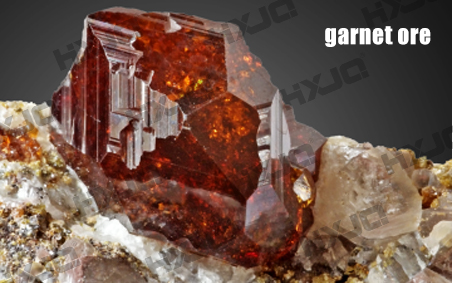
Garnet is one of the most versatile industrial minerals on the market. With Mohs hardness of 7.0–8.5 and a specific gravity of 3.5–4.3, it delivers exceptional performance as an abrasive for waterjet cutting, surface blasting, water filtration, and precision polishing. Its sharp, angular particles—particularly from rock-type garnet—provide superior cutting efficiency without the health risks associated with silica sand.
However, the very properties that make garnet valuable also make it extremely difficult to process:
Extreme hardness (7.0–8.5 Mohs) → Rapid wear on crushers, mills, and all downstream equipment
Abrasive nature → Frequent replacement of jaw plates, cone liners, mill liners, and grinding media
Two distinct ore types → Rock garnet requires full crushing-grinding circuit; alluvial garnet needs only washing and gravity concentration
Stringent particle size requirements → Waterjet cutting needs precisely graded mesh; polishing requires micron-sized powders (down to 5 μm)
We are a professional mining equipment manufacturerwith decades of experience in hard-rock mineral processing. Our machinery is engineered specifically for high-hardness, high-abrasion applications like garnet. We don't just sell individual machines—we design and supply complete processing lines from primary crushing through final product classification, backed by customized process engineering support.
2. Rock Garnet vs. Alluvial Garnet: Two Different Processing Routes Explained
Before diving into equipment selection, it's essential to understand that garnet deposits fall into two distinct categories, each requiring a completely different processing approach:
Origin:
Rock garnet is mined from solid bedrock deposits through drilling and blasting.
Alluvial garnet is found in beach sands, riverbeds, or ancient alluvial deposits, accumulated through natural weathering and transport.
Particle State:
Rock garnet is extracted as large boulders that require significant size reduction to liberate individual garnet grains.
Alluvial garnet is already liberated as individual sand-sized grains, requiring no blasting or crushing.
Processing Route:
Rock garnet requires a full processing circuit: blasting → primary crushing → secondary crushing → grinding → classification → beneficiation.
Alluvial garnet follows a simpler route: excavation → washing → screening/classification → gravity separation → (optional) magnetic separation.
Equipment Required:
Rock garnet processing needs: jaw crusher, cone crusher, ball mill or rod mill, spiral classifier, gravity separators (spiral chute), and magnetic separators.
Alluvial garnet processing needs: trommel screen, spiral classifier, spiral chute, and an optional magnetic separator for final upgrading.
Product Quality:
Rock garnet produces sharp, angular particles with high cutting efficiency—the preferred choice for waterjet cutting and high-performance abrasives.
Alluvial garnet yields naturally rounded particles; suitable for many blasting applications but less sharp and aggressive than rock garnet.
Most industrial garnet used for waterjet cutting and high-performance abrasives comes from rock-type deposits. Our equipment solutions are designed with rock garnet as the primary application, with alluvial processing offered as a complementary capability.
3. Rock Garnet Processing: A Complete Crushing and Beneficiation Solutions
3.1 Feeding Equipment for Garnet Processing: Vibrating Feeders and Screens
Run-of-mine garnet ore is extracted through drilling and blasting, then transported to the processing plant. Vibrating feeders uniformly feed the material into the primary crusher, ensuring consistent throughput and protecting the crusher from surge loads. For finer pre-screening, vibrating screen can scalp fines ahead of crushing to improve efficiency.
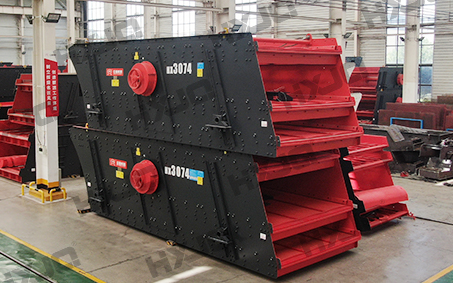
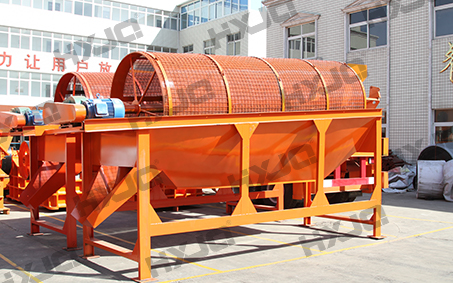
Our equipment: vibrating screen , trommel screen for garnet(for alluvial applications)
3.2 Crushing Garnet: Primary Jaw Crusher and Secondary Cone Crusher Selection
3.2.1 Primary Crushing – Jaw Crusher
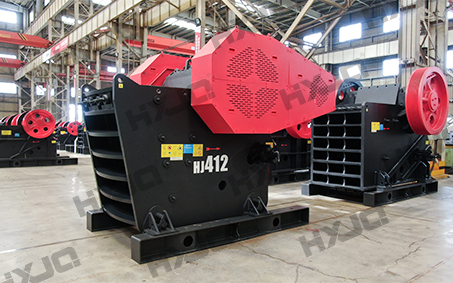
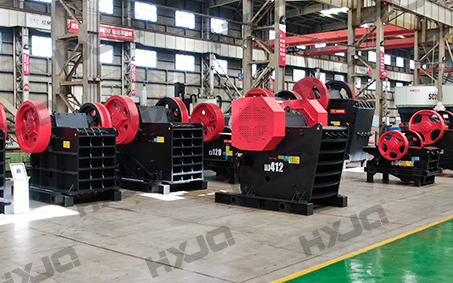
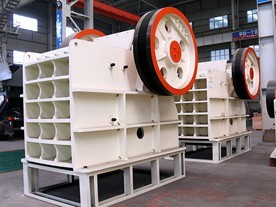
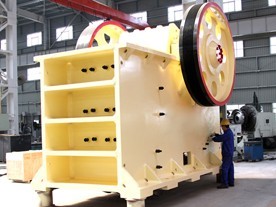
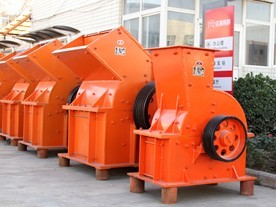
The extracted garnet boulders undergo primary reduction in our heavy-duty jaw crusher. With high-manganese steel jaw plates, our crushers are built to withstand the extreme impact and abrasion of hard garnet feed.
Key advantages:
Suitable for fixed crushing lines and mobile crushing plants.
The deep V cavity allows the material into the crushing cavity without any obstruction, thus ensuring the best feeding ability.
Wear-resistant jaw plates with work-hardening properties.
3.2.2 How to Choose Between Cone Crusher and Impact Crusher for Garnet
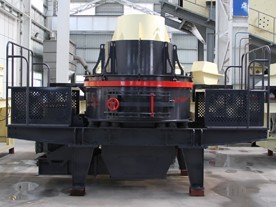
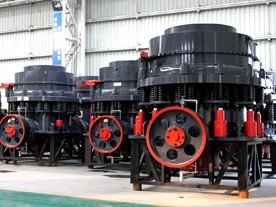
We strongly recommend the garnet cone crusher for garnet secondary crushing. This is not a preference—it's a technical necessity based on material properties and economic considerations. 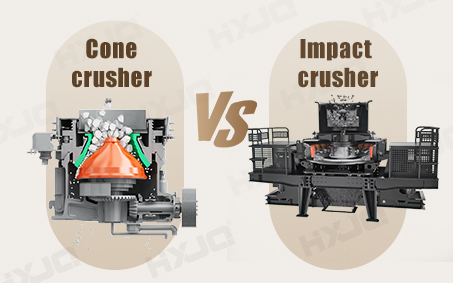
Cone crusher vs Impact crusher
Crushing Principle
Cone crusher: Layer compression (inter-particle crushing)
Impact crusher: Impact energy (blow bars strike material)
Hardness Suitability
Cone crusher: High-hardness materials (garnet 7.0–8.5 Mohs, granite, basalt)
Impact crusher: Medium to low hardness only (limestone, etc.)
Fines Generation
Cone crusher: Lower fines production—more valuable coarse particles preserved
Impact crusher:Higher fines production—valuable garnet lost as dust
Wear Parts Life
Cone crusher: Long; manganese liners withstand abrasion over extended periods
Impact crusher: Very short; blow bars wear catastrophically on hard material
Operating Cost
Cone crusher: Higher initial investment, lower long-term cost
Impact crusher: Lower initial cost, much higher long-term maintenance
Why we insist on cone crushers for garnet:
The inter-particle compression mechanism of a cone crusher creates fractures along natural grain boundaries, preserving the integrity of individual garnet crystals. This produces less over-grinding (fines) than impact crushing—which means more valuable garnet particles survive to reach the final product.
Practical reality check: Some studies have tested impact crushers for garnet and reported blow bar replacement every three days. At that rate, the maintenance costs, downtime, and lost production would quickly overwhelm any initial equipment savings. For a commercial garnet processing operation, this is simply unsustainable.
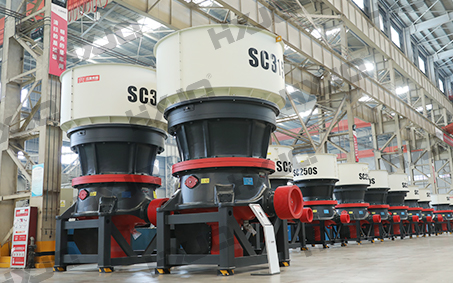
Our equipment: single cylinder hydraulic cone crusher
3.3 Grinding Garnet: Rod Mills vs. Ball Mills for Optimal Particle Size
After secondary crushing, the garnet-bearing material is fed into grinding mills to achieve the particle size required for liberation and downstream beneficiation.
Rod Mill → Coarse grinding (producing particles 0.5–5 mm) → Uses line-contact between rods; produces uniform particles with minimal fines—ideal for preserving coarse garnet for abrasive applications
Ball Mill → Fine and ultra-fine grinding (down to D97 ≤ 5 μm) → Uses point-contact between balls; achieves very fine particle sizes for precision polishing powders
How Rod Mills Improve Particle Uniformity in Garnet Grinding:
For garnet processing, the rod mill is often the preferred choice for the initial grinding stage. Because rods contact the material along lines rather than points, the grinding action is gentler and more selective—creating a narrower particle size distribution with significantly less over-grinding compared to ball mill. This is particularly valuable when producing coarse abrasives where particle uniformity is critical.
Wear-Resistant Liners: Both our ball mills and rod mills feature high-chrome alloy liners and manganese steel liners specifically formulated to withstand the abrasion of hard minerals like garnet. Proper liner selection can extend service life by 40% or more compared to standard liners.
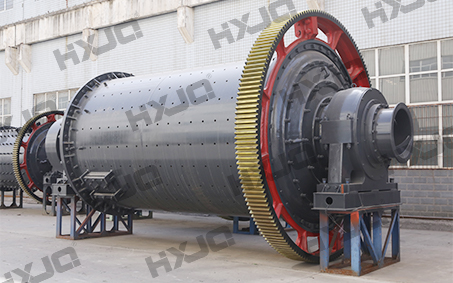
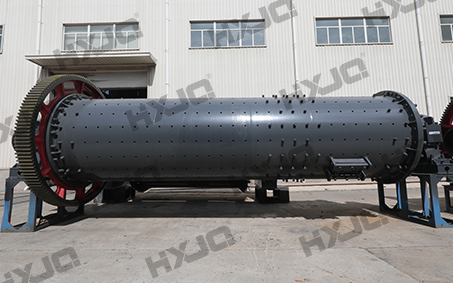
Our equipment: rod mill , ball mill , with customizable media grading and liner materials
3.4 Classification After Grinding: Using Spiral Classifiers for Size Control
After grinding, the slurry must be classified by particle size. Our spiral classifier separate fine and coarse particles using sedimentation principles.
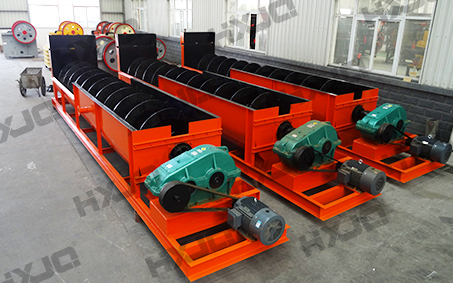
How it works:
Fine particles overflow the weir and proceed to beneficiation
Coarse particles settle and are returned to the mill for re-grinding (closed-circuit operation)
This ensures that only properly sized material enters the beneficiation circuit, maximizing both recovery efficiency and final product quality.
Our equipment: spiral classifier
3.5 Beneficiation Methods for Garnet: Gravity Separation and Magnetic Separation
3.5.1 How to Process Coarse Garnet with Gravity Separation
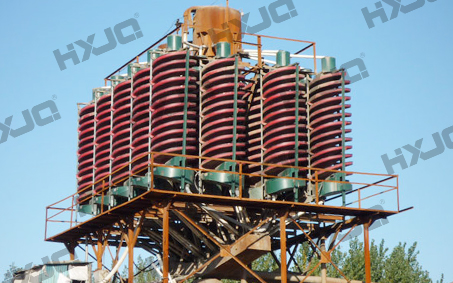
For coarse particles (typically >0.5 mm), gravity separation using spiral chute or jigs is the most economical and effective method.
Principle: Garnet (SG ≈ 4.0) is significantly heavier than common gangue minerals like quartz (SG ≈ 2.6). As the slurry flows down the spiral trough, heavier garnet particles concentrate at the inner edge while lighter gangue moves to the outer edge, where it is separated.
Advantages:
No reagents—environmentally friendly
Low operating costs—no energy-intensive equipment
High throughput—spiral chutes handle large volumes efficiently
Our equipment: spiral chute
3.5.2 How to Achieve High Purity with Magnetic Separation for Fine Garnet
For finer particles, magnetic separation is highly effective for removing iron-bearing impurities.
Principle: Garnet (particularly almandine variety) is weakly magnetic, while impurities like magnetite and hematite are strongly or moderately magnetic. Our magnetic drum separator apply a strong magnetic field to selectively remove these impurities, upgrading the garnet concentrate.
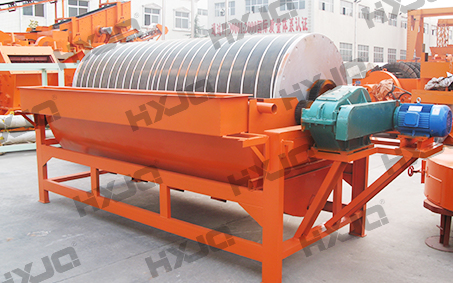
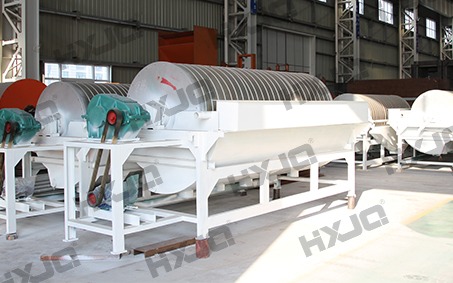
Our equipment: magnetic drum separator
3.5.3 How to Achieve 95%+ Purity with Combined Gravity and Magnetic Separation
For maximum grade and recovery, we recommend the gravity pre-concentration followed by magnetic finishing strategy:
1. Gravity separation removes the bulk of light gangue material cheaply and at high volume
2. Magnetic separation polishes the product to premium purity specifications
This combined approach has been validated in multiple industrial studies, delivering garnet concentrates with 95%+ grade and recoveries exceeding 87%. It's the optimal balance of efficiency and product quality.
Our equipment: magnetic drum separator , spiral chute
3.6 Drying – Rotary Dryer
After wet beneficiation, the garnet concentrate contains significant moisture that must be removed before final screening and packaging. Our rotary dryer are designed for energy-efficient moisture reduction, using hot air or natural gas to dry the product to <1% moisture content.
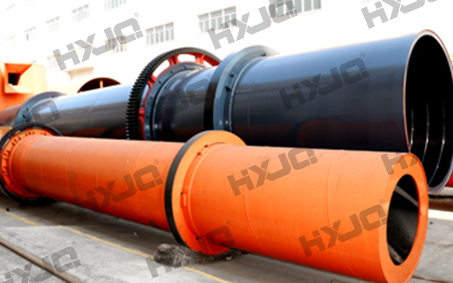
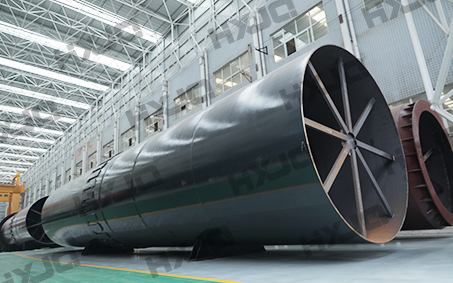
Our equipment: rotary dryer with customizable heat sources (gas, oil, coal, or biomass)
4. How to Process Alluvial Garnet: Washing and Gravity Concentration
Alluvial garnet deposits are already in sand form—individual garnet grains mixed with lighter sand, shell fragments, and organic matter. Since the garnet is already liberated, no crushing or grinding is required.
Processing route:
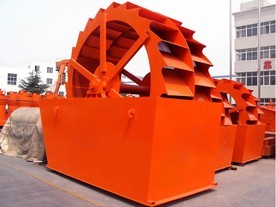
1. Washing (trommel screen for garnet) – Removes clay and organic contaminants
2. Screening (spiral classifier/vibrating screen ) – Separates material by size fraction
3. Gravity Separation (spiral chute) – Concentrates garnet from lighter sand
4. Optional Magnetic Separation(magnetic drum separator) – Upgrades product purity after gravity concentration
This simpler flowsheet is economical and proven in operations like the Port Gregory mine in Western Australia, where spiral classifiers effectively separate garnet from lighter impurities using water and centrifugal force.
.jpg?width=270&height=230&name=Rectangle%20707%20(11).jpg)
Our equipment: magnetic drum separator , spiral chute , spiral classifier , vibrating screen , trommel screen for garnet
5. Why Choose Our Garnet Processing Equipment?
5.1 Wear-Resistant Equipment Design
We understand that garnet is one of the most wear-intensive minerals to process. Every component in our equipment line is engineered with this reality in mind:
High-manganese steel jaw plates for jaw crusher
Heat-treated garnet cone crusher mantles and concaves
High-chrome alloy liners for ball mill and rod mill
Abrasion-resistant steel throughout all material handling components
This focus on durability translates directly to lower operating costs and reduced downtime for your processing plant.
5.2 Complete Processing Line Supply
Unlike equipment suppliers who specialize in a single machine type, we provide the entire processing train:
Primary and secondary crushers(jaw crusher and garnet cone crusher)
Grinding mills (ball mill and rod mill)
Classification equipment ( spiral classifier, vibrating screen)
Beneficiation equipment (spiral chute , magnetic drum separator)
Drying systems (rotary dryer)
One supplier, one responsibility, one warranty. You don't need to coordinate multiple vendors or manage conflicting interfaces.
5.3 From Coarse Crushing to Ultra-Fine Grinding
Our equipment portfolio covers the full particle size spectrum required for garnet processing:
Coarse (0.5–5 mm) → Jaw crusher, cone crusher, rod mill → Blasting media, waterjet abrasives
Fine (45–150 μm) → Ball mill, spiral classifier → Waterjet abrasives, standard industry grades
Ultra-fine (D97 ≤ 5 μm) → Ball mill → Precision polishing powders
This capability means we can design and supply a complete line tailored to your specific product specifications—whether you're producing coarse blasting media or micro-fine optical polishing powders.
6. Contact Us – Let's Discuss Your Garnet Processing Project
We provide complete processing equipment packages and customized plant designs.
Whether you are:
✅ Planning a new rock garnet processing facility
✅ Developing an alluvial garnet deposit
✅ Upgrading an existing plant with modern equipment
✅ Requiring specific equipment for a processing bottleneck
Simply share your project details with us:
- Ore type: Rock or alluvial?
- Target capacity: Tons per hour
- Feed size: ROM size or pre-crushed size
- Discharge size: What kind of size stone you want
We will provide:
Preliminary process flow design
Equipment selection recommendations with technical justification
Budgetary quotation with lifecycle cost analysis
If you need equipment quotation, please feel free to Get Quote.
Email: sell@hxjq.com
Address: High and New Industrial Zone, Kexue Revenue, High and New Technology Industrial Development Zone, Zhengzhou, China
Privacy Guarantee